

LMU
How to Make the Most of Le Mans Ultimate’s Hybrid Systems
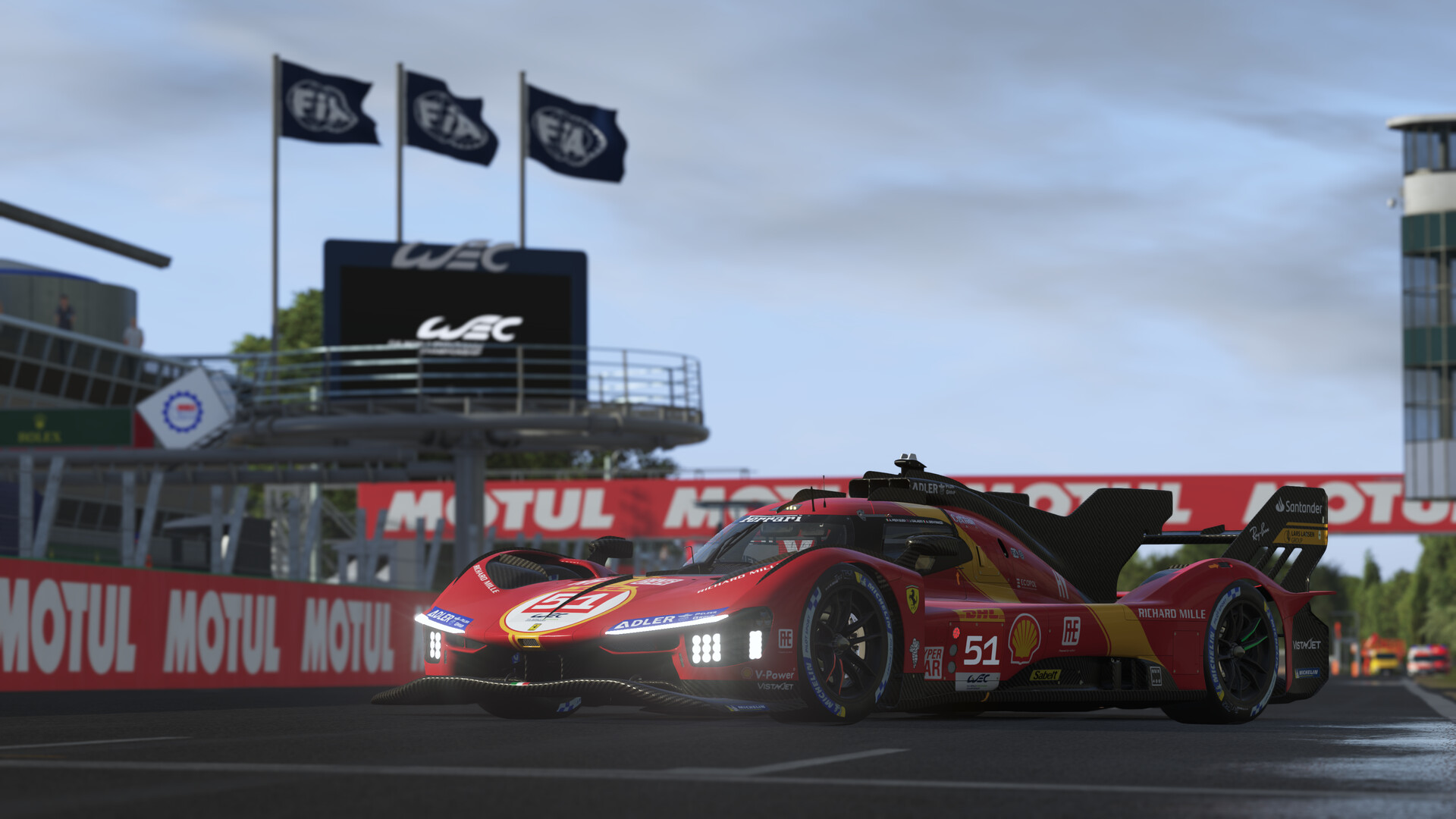
Le Mans Ultimate is the official sim of the FIA World Endurance Championship, which sees Hypercar and LMGT3 classes battle it out for the prestige of becoming certified world champions. Studio 397 and Motorsport Games have thankfully recreated WEC racing in exacting detail, ensuring LMU feels great to drive while retaining the authenticity of the real-world championship. A huge part of this is the complex hybrid systems in the Hypercar class, whose rules are designed to promote efficiency, attracting many green-focused manufacturers as a result. To make the most of Hypercars in LMU, drivers must understand how these systems work and how to optimise their use. Find out all you need to know about LMU’s Hypercar hybrid systems below.

What is NRG in Le Mans Ultimate?
In-game, you may notice an ‘NRG’ symbol to the bottom right of the HUD. This represents your virtual energy tank, which is the total amount of energy your car is allowed during a stint, split between electrical energy used by the motor generator unit (MGU) and fuel from the internal combustion engine (ICE).
This figure differs per car based on a Balance of Performance (BoP) calculation set by the FIA and Automobile Club de l'Ouest (ACO), the organising and governing bodies of the WEC and the 24 Hours of Le Mans. However, the total energy output of a Hypercar is estimated to be around 251 kWh per stint.
Although some Hypercars can regenerate and deploy electrical energy, their combined power output is limited to 500 kW (BoP-dependent). This means that electrical energy deployed by the MGU supplants ICE power; it doesn’t add to it.
Regeneration occurs when heat energy is harvested and converted to electrical energy under braking. This is then stored in a battery for later use by the MGU.
The focus of the virtual energy system is therefore fuel efficiency. By using the minimum amount of ICE fuel, drivers can extend their stints and spend less time in the pits during a race.
Refuelling saps time, so every litre of fuel a driver can save through lifting and coasting (lifting off the throttle well before a corner to let the car’s aerodynamics slow it down before braking) or short-shifting (shifting to a higher gear earlier than usual to minimise RPM) is crucial.
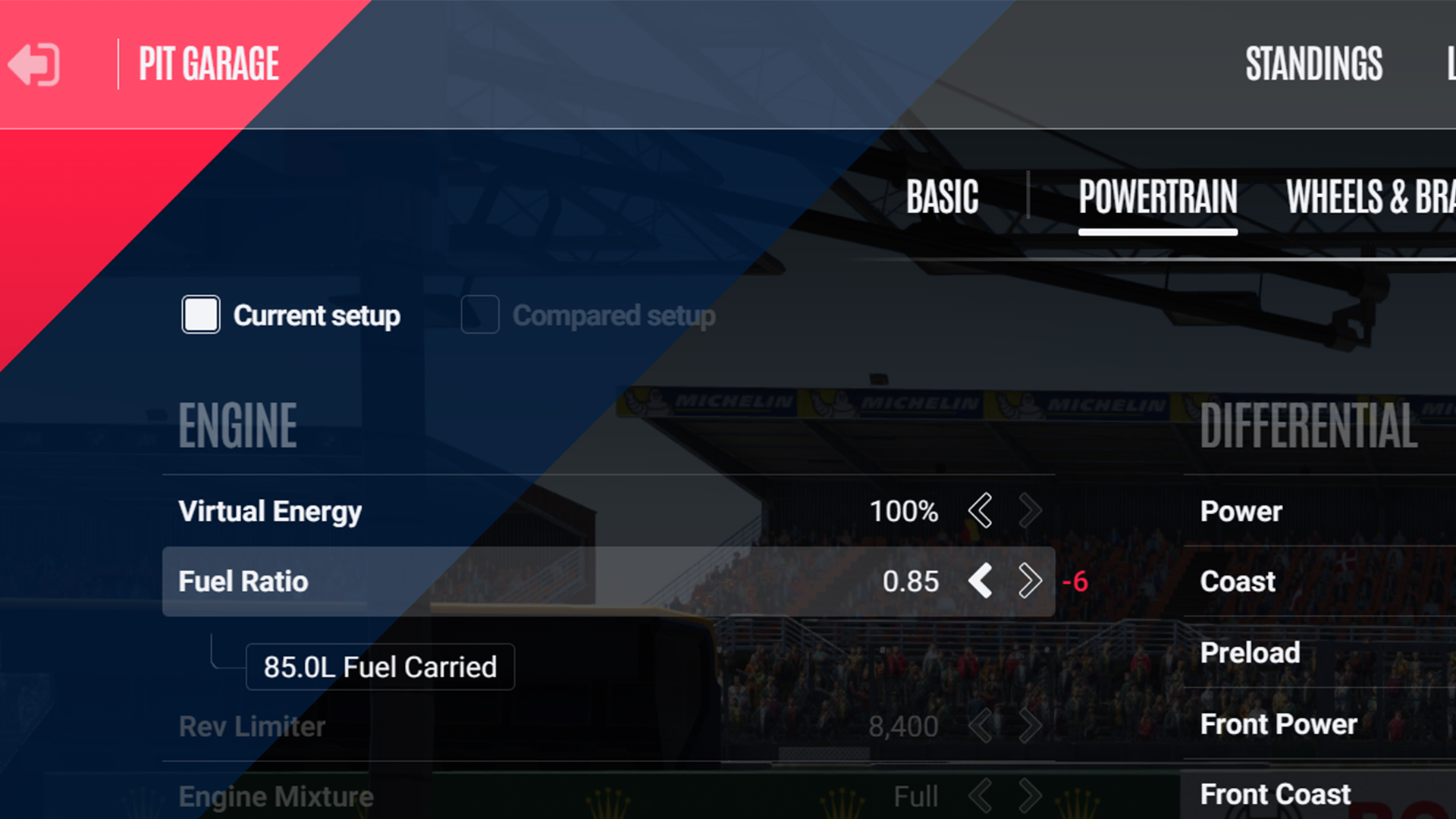
A hybrid Hypercar’s fuel tank will never be brimmed for a race stint as a result, with the ‘fuel ratio’ setting typically around 85% of the total virtual energy allowance. Naturally, this figure is also track dependent, with the long straights of the Circuit de la Sarthe requiring a higher proportion of ICE fuel than the flowing curves of the Algarve International Circuit, for example..
Explaining Hybrid Differences in Le Mans Ultimate’s LMH and LMDh Hypercars
There are subtle differences in LMU and WEC’s Hypercar class. The category is split between LMDh and LMH cars, which are built to contrasting regulations.
LMH
Without going into granular detail, manufacturers building and running LMH cars, such as the Ferrari 499P and Toyota GR010, are obliged to run their MGUs on the front axle, meaning they utilise four-wheel drive under deployment.
However, as this provides a huge traction advantage, the rules state they can only deploy MGU power above 190 kph. LMH cars are allowed to deploy up to 200 kW via the MGU in LMU and WEC.
Confusingly, not all LMH cars have an MGU; the Aston Martin Valkyrie, for example, relies entirely on its naturally aspirated V12 ICE. Thanks to BoP, however, the impacts of this are mitigated.
.jpg)
LMDh
LMDh cars are designed with a spec Williams Advanced Engineering MGU hybrid system in mind, but fitted to the rear axle. There is no minimum deployment speed for LMDhs, but the maximum potential deployment figure is much lower: 50 Kw.
LMDh cars include the Porsche 963, Alpine A424 and BMW M Hybrid V8.
The full list of LMDh and LMH cars in LMU is available below.
.jpg)
LMH cars in Le Mans Ultimate
- Aston Martin Valkyrie AMR-LMH (no MGU)
- Ferrari 499P
- Glickenhaus SCG 007 LMH (no MGU)
- Isotta Fraschini Tipo 6 LMH
- Toyota GR010 Hybrid
- Vanwall Vandervell 680 (no MGU)
- Peugeot 9X8
- Peugeot 9X8 (2024)
LMDh Cars in Le Mans Ultimate
- Alpine A424
- BMW M Hybrid V8
- Cadillac V.Series-R
- Lamborghini SC63
- Porsche 963
Managing NRG in Le Mans Ultimate
In LMU, balancing the MGU regen rate (how aggressively the MGU harvests heat energy from the brakes) with the motor map setting (the battery deployment rate) is vital.
In WEC, teams can develop automated MGU deployment strategies to find the best compromise between efficiency and speed.
This isn’t available to LMU players, however, so it must be managed manually.
Electric Motor Map and Regen Rate
Managing virtual energy in LMU is done by adjusting two mappable settings: electric motor map and regen rate.
In LMU, setting the regen rate to its highest value (200 kW for applicable LMH cars and 170 kW for LMDhs) is the optimal setting and doesn’t require fine-tuning.
The highest regen rate setting corresponds to the best braking performance, as the MGU assists in slowing the car down. This also charges the battery more quickly (more aggressive braking intervention generates more heat through the MGU, which in turn charges the battery faster).
Battery Charge Levels
LMU players will need to monitor the electric motor map setting more closely, as it’s imperative to avoid the battery reaching either 0% or 100% charge.
If the battery reaches 100% charge, the MGU will cease to assist with braking, causing LMH cars to lock their rear wheels and LMDhs to lock their fronts. This also causes brake temperatures to increase, as a bigger percentage of the car’s braking is handled by the discs and pads rather than the MGU.
Also, LMDh cars require some battery charge to restart after a pitstop. Pitting with 0% charge will result in an embarrassing DNF.
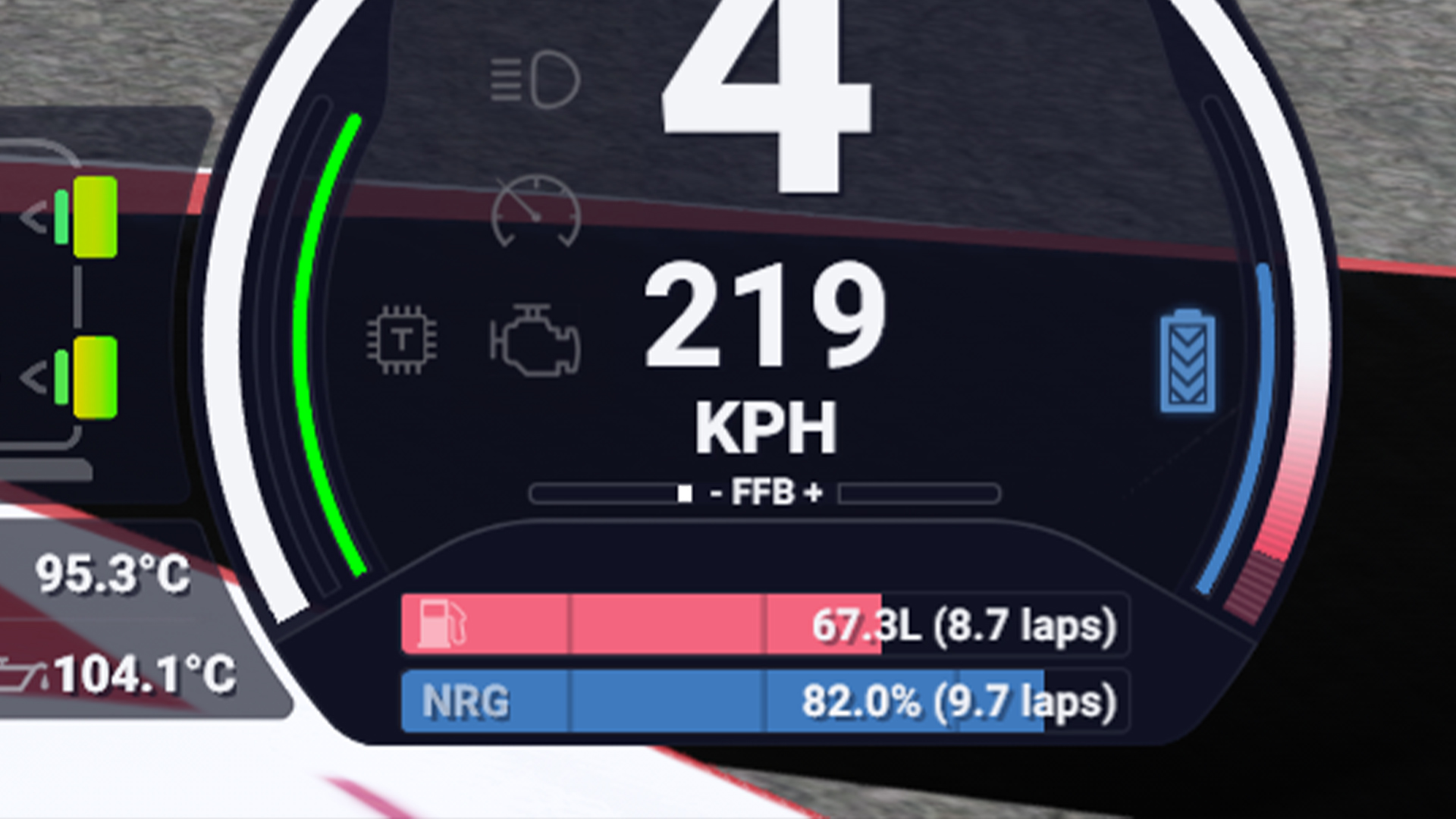
When the MGU is charging the battery under braking, the battery icon in the bottom-right of the in-game HUD is green. When the MGU deploys energy from the battery, the icon goes blue. When the MGU is neither charging nor discharging the battery, the icon is empty (see images below).
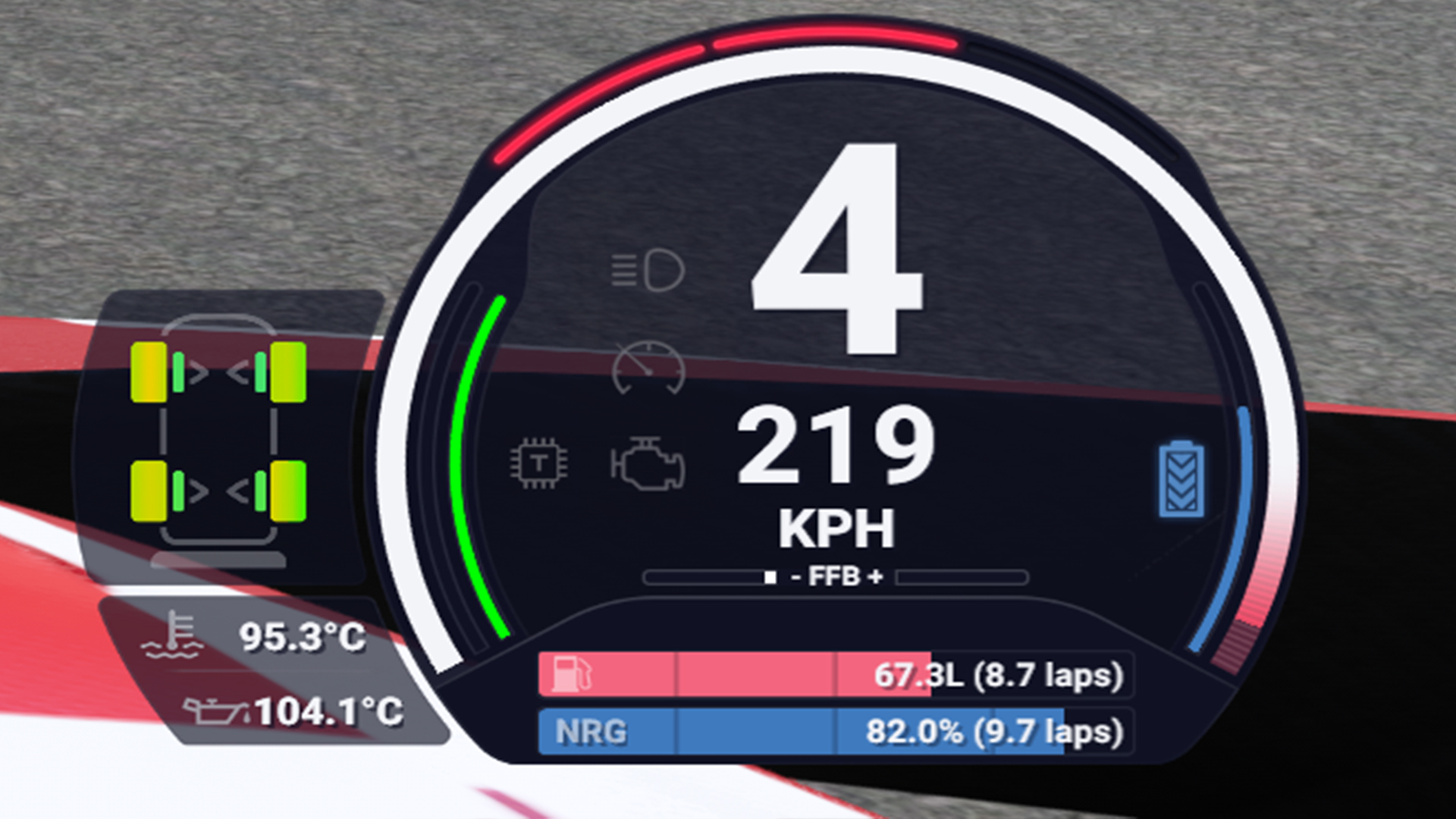
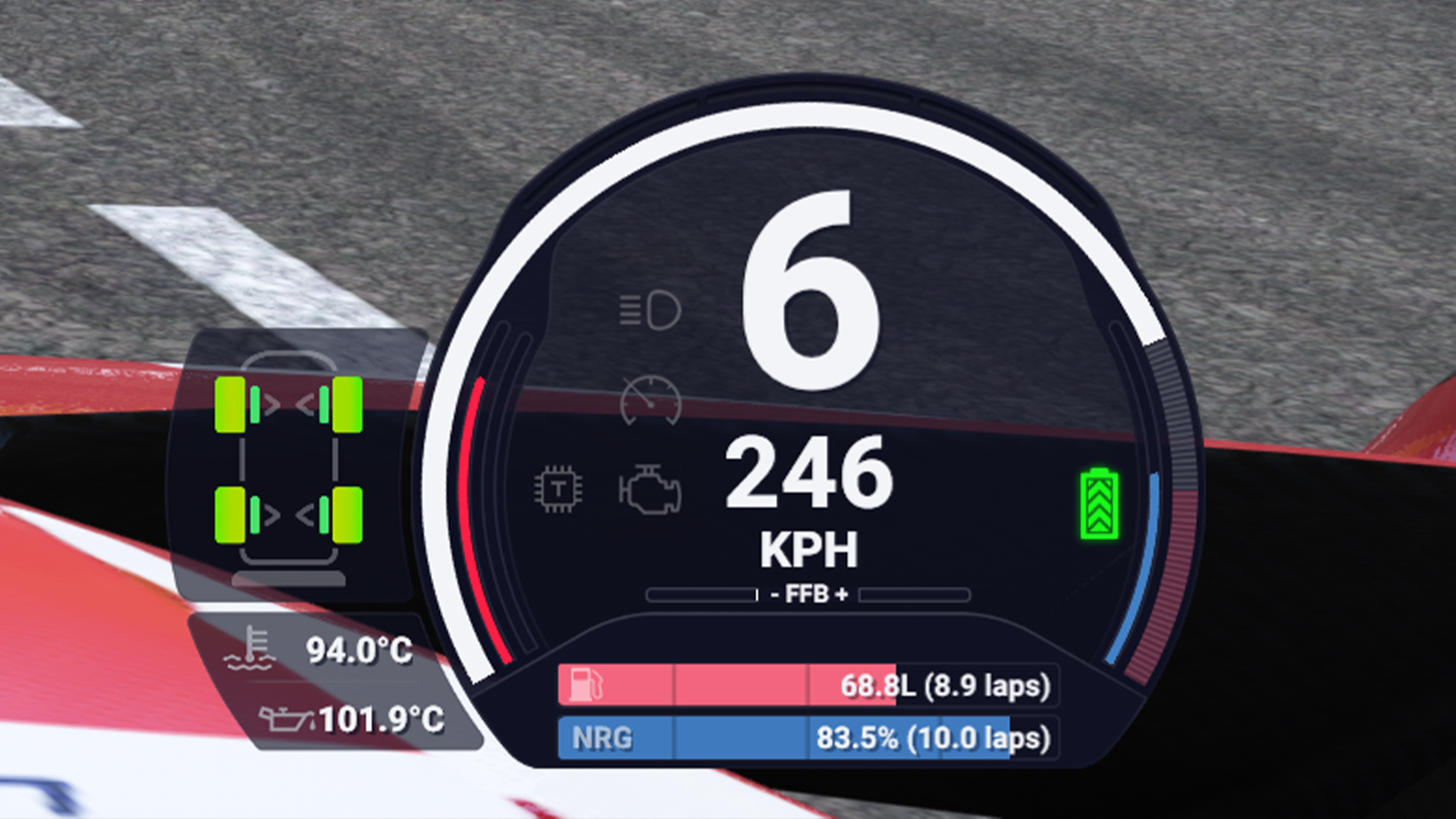
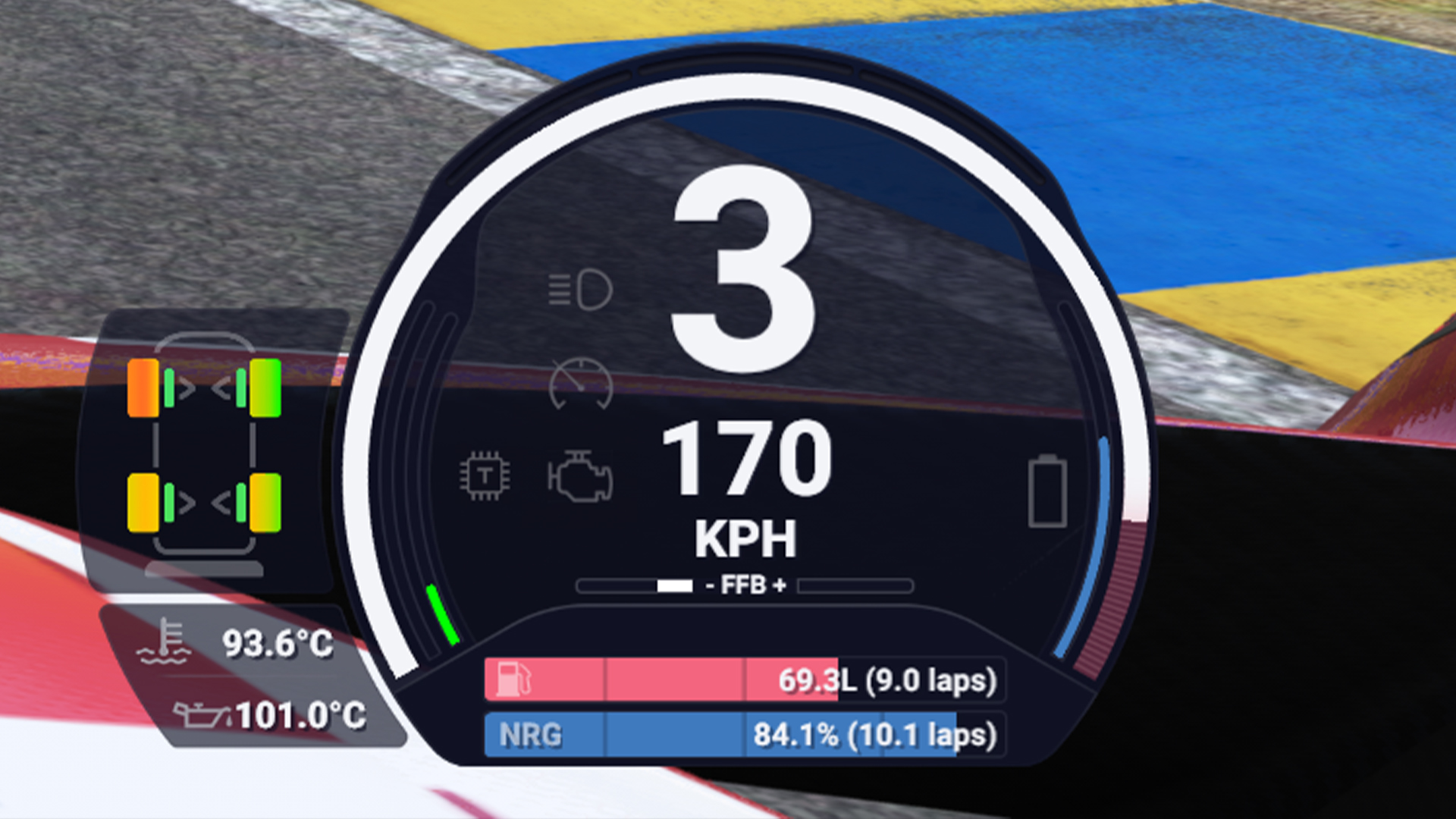
Generally, the optimal electric motor map setting across a race stint is around 50kW for LMDh cars and 60 kW for LMHs, with players advised to monitor their charge levels to avoid the pitfalls described previously.
In theory, using higher motor map settings exiting slow corners can be quicker in terms of lap time due to electric motors' instant torque, but this can only be achieved by LMDh cars in-game. It’s trickier to manage NRG like this during a full stint, however, owing to the constant adjustment required, so it’s not recommended.
Tips for Managing NRG in Le Mans Ultimate
At the beginning of a race, the battery will generally be 100% charged, and your car will be susceptible to brake lock-ups. To avoid this, set the electric motor map to its maximum setting for the first few corners, ensuring the MGU can charge the battery and assist with braking.
Also, keep an eye on the NRG bar to make sure you don’t exceed the maximum virtual energy allowed per stint. Doing this will incur a 100s stop-and-go penalty and destroy your race.
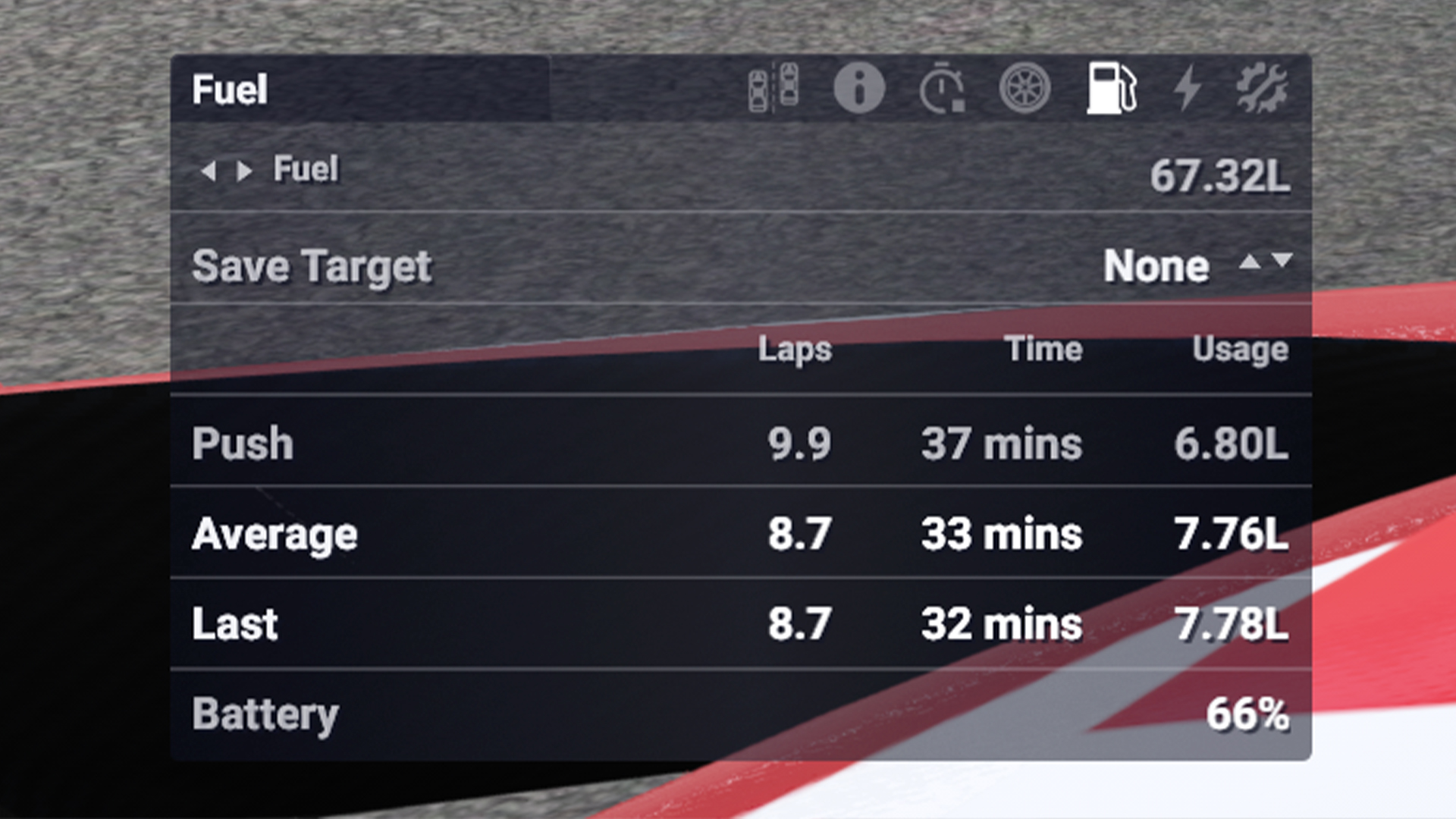
LMU allows players to constantly monitor their fuel and virtual energy targets. Cycle through the MFD to find the ‘Fuel’ tab. Here you can see more information on your fuel and virtual energy, including average and previous lap usage.
This will help you gauge how much fuel-saving (if any) you need to complete a stint. You will also be able to see how many estimated laps remain of NRG and fuel in the bottom-right corner of the screen.
For more tips on improving your driving in Le Mans Ultimate, why not sign up for trophi.ai coaching? Harnessing the power of AI, trophi.ai is an app that monitors your virtual driving and offers real-time suggestions to help you become a faster, more consistent sim racer.
Also available for Rocket League, Assetto Corsa Competizione, iRacing and F1 23/24/25, trophi.ai is available as part of a tiered subscription system, with the cheapest giving you live telemetry and access to the MansellAI voice coach, voiced by former racing driver and Driver61 founder Scott Mansell.
This is also available as part of a seven-day free trial, so you can easily find out for yourself if AI-powered driver coaching can work for your Le Mans Ultimate sim racing career.
For more information and to sign up for the free trial, please visit the trophi.ai website.


