

Rocket League
Rocket League Championship Series Explained
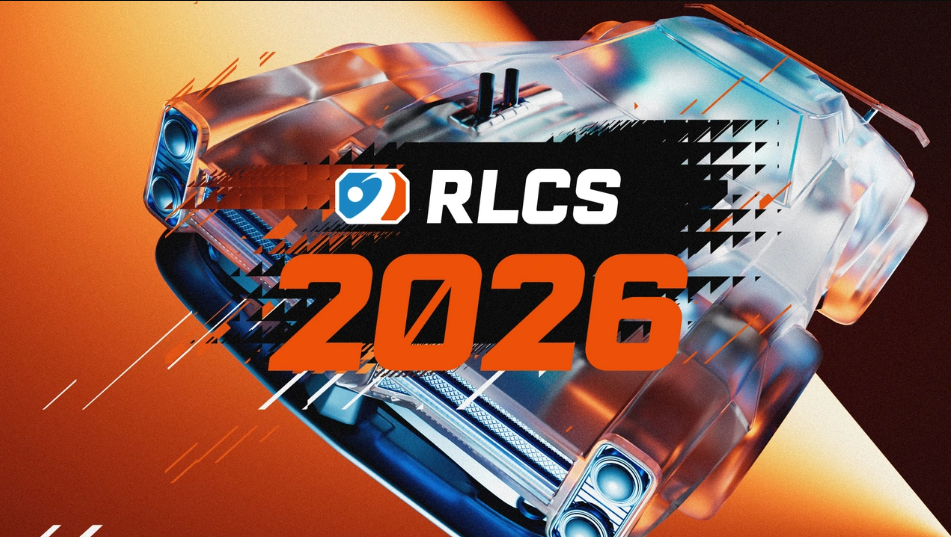
This is it. The pinnacle. Rocket League may be used across multiple different competitions and events, such as Dreamhack and Esports World Cup, but the Championship Series and World Championship (RLCS) is the one every professional competitor wants to win. Here’s everything you need to know.

What is the Rocket League Championship Series?
In essence, the Rocket League Championship Series is a yearly league, with multiple rounds and even in-person LAN events, culminating in the world’s best players competing at the World Championship.
This is a predominantly team-based competition, and for 2026, across three game types, each with its own series: 2v2 joins the popular 3v3 and 1v1, which itself debuted last year.
The total prize pool this season is $6.1 million, spread across the various stages and disciplines. The competition for 3v3 teams has already begun, with 2v2 and 1v1 qualifications not starting until May and June 2026, respectively.
The location for the season-ending World Championship is yet to be announced, although there will be LAN events in Denmark, USA and France before the finals.
Ahead of those meetings, there is a complex series of online events to whittle down the teams to those who can challenge for the title.
Rocket League Championship Series Format and Qualification Overview
To reiterate, the details for 2v2 and 1v1 will be announced at a later date, but for 3v3, the action is already underway.
The first thing you need to know is that the competitors are split into the following seven regions:
- NA - North America
- EU - Europe
- SAM - South America
- MENA - Middle East & North Africa
- OCE - Oceania
- APAC - Asia-Pacific
- SSA - Sub-Saharan Africa
They will compete in online qualifying rounds called ‘Opens’ - each region has three of these, duplicated across two splits.
Points can be awarded in each Open, and the top teams in each region’s split then qualify for an in-person ‘Major’… but more on those in a moment.
The format for the Opens can be perplexing, but as there can be over 900 teams (this is an open-qualifying stage) in some of the more populous regions, it’s designed to narrow down the teams in quick succession.
Here’s the structure:
- Double-Elimination bracket - At the start of the Open, every team is in the upper bracket. Lose, and you drop to the lower bracket. Lose again in the lower bracket, and you’re eliminated.
- Swiss stage - The top 32 teams from the double-elimination bracket compete in best-of-five (Bo5) matches. Teams only play those with the same win–to-loss record. With three matches to move to the next stage. Lose three, however, and face elimination.
- Group GSL stage - 16 teams then move to this stage (Global StarCraft League format), where there are two groups of eight teams.
- Hybrid Elimination bracket - Final eight teams now. ‘Hybrid’ is so called as it uses single and double elimination rules. The top four in the group stage start with two chances before the ‘Final Four’, as opposed to one chance for the remaining entrants.
New for 2026 is a Kick-Off Weekend LAN event for the top six teams from Open 1 in the EU and NA regions only. This will be held in Copenhagen, Denmark, and these teams are competing for a guaranteed spot in a Major, plus potentially unlocking another slot for their region.
Speaking of Majors, these will be in Boston, USA and Paris, France. 16 teams are expected in the majors, decided by their points earned across the three Opens in their region. Each region has a different number of Major slots; for example, Europe has five, Asia-Pacific 1. Plus, there’s the potential for the aforementioned Kick-Off Weekend slot, too.
Then, finally, the World Championships, with entrants here based on results in the Opens and the Majors. The winning team will not only be world champions, but will also take home $300,000.
Past Champions
The RLCS and World Championships are nine years old, with the first running back in 2016. In that time, many teams and competitors have come and gone, but the event remains incredibly popular.
Of those who have participated, European teams have won the most World Championships and Majors, with North America second and the Middle East & North Africa securing one Major, thanks to Team Falcons.
The most successful squads are Team BDS and Team Vitality, jointly, with two world titles and a Major, while NRG Esports has also claimed two World Championships.
Written by the teams at trophi.ai and Traxion.GG.


