

Sim Racing
Why Smooth is Fast… Most of the Time
In both motorsport and sim racing, you’ll likely have heard the old adage that ‘smooth is fast’, which is fundamentally correct in most driving scenarios. However, for several reasons, this may not always be the case. Read on to find out more.

Weight shifting
Weight shifting, or the more technically accurate term load shifting, is key to driving quickly on a sim and in the real world. Gradually shifting the load to the front axle of your car, by braking or turning in smoothly, maximises both grip and control in a safe and predictable manner.
Braking
For example, stamping on the brake pedal is more likely to overwhelm your front tyres and reduce the contact patch on the rears due to the forward shift in load. This can cause instability and potentially lead to oversteer, requiring a time-sapping correction or even a total loss of control.
However, by applying the brakes more smoothly, the load shifts in a more controlled way, maintaining the maximum amount of grip across all four wheels. For example, applying the brakes too heavily places a comparatively higher load on the front tyres, pushing them beyond their optimal grip levels while leaving the rears with very little to do.
Applying the brakes firmly but gradually will better distribute the load among all four tyres, providing more overall grip and control..
Smoother load transfers also put less stress on your front tyres, as their peak load is smaller. This also reduces their peak temperature, as overwhelmed tyres will simply slide across the track surface, generating heat. The tyre wear benefits ensure your rubber will stay in better shape throughout a stint.
Turning
Similar to braking, turning the steering wheel more progressively loads the car up in a more predictable and controlled way.
Using abrupt steering inputs will unsettle the car, shifting the load in an unbalanced way, making it easier to lose control.
It’s no secret that drift racers use aggressive steering and brake inputs to provoke their cars into a slide, and heavy throttle inputs to maintain it. This isn’t the quickest way to drive, but it is quite spectacular! Take a loot at this drifitng for beginners tutrorial from our founder Scott Mansell.
Accelerating
Accelerating smoothly is more straightforward than turning and braking smoothly. Essentially, it requires a gradual application of the throttle pedal so that the car’s behaviour remains relatively stable.
A general rule of thumb is to never press the throttle until you know you never have to lift off. Applying too much throttle too early can lead to oversteer and/or losing control of the car (except in a front-wheel-drive machine, which will suffer from understeer), while lifting off abruptly through a corner because you’ve underestimated the exit can shift the balance forward and lead to oversteer.
If you have to come off the throttle, do it in a controlled way to avoid unbalancing your car.
ACC Racing Example
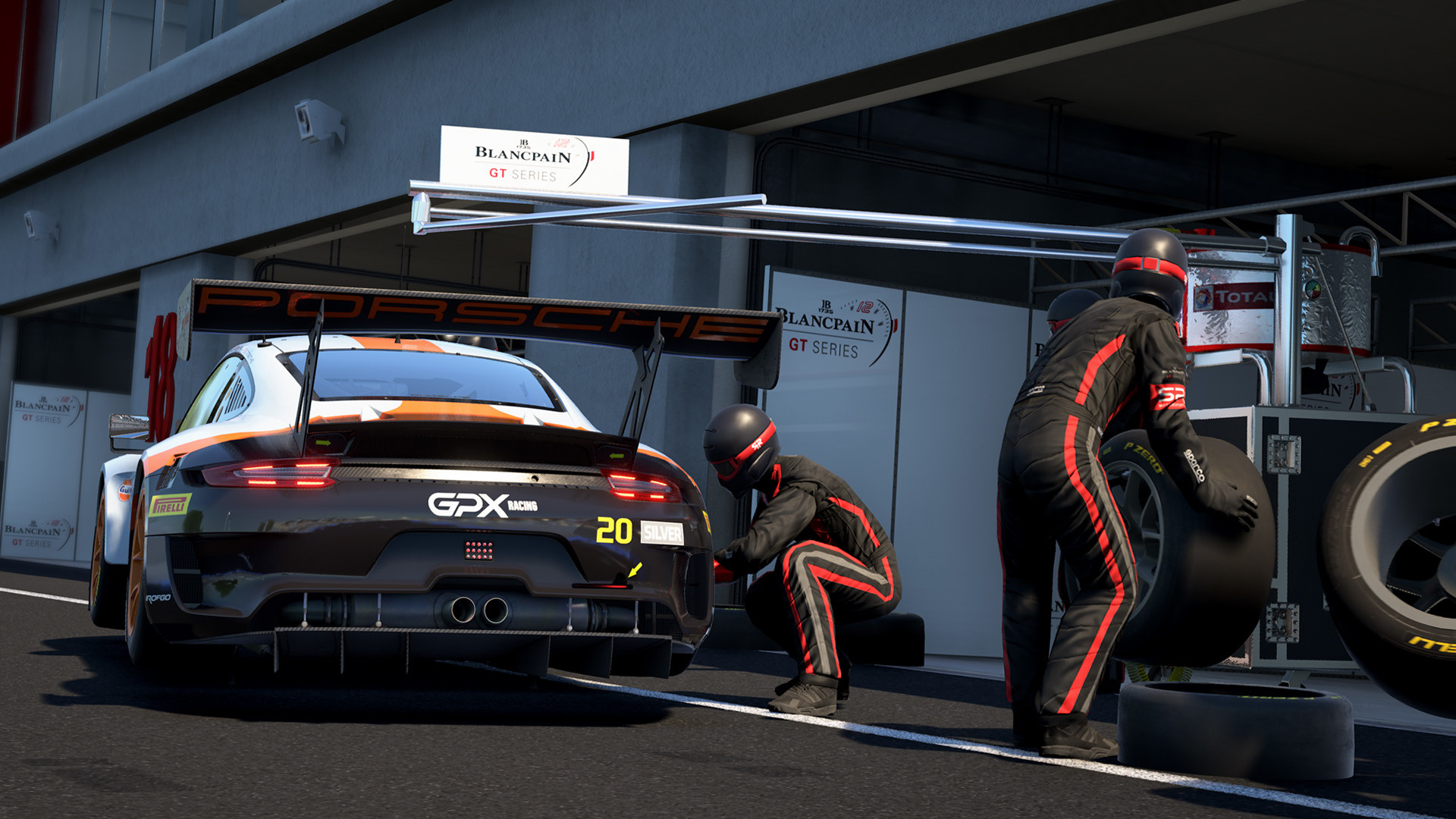
One example I can use from my own sim racing career was from a SimGrid World Cup event back in 2021. Driving the McLaren 720S GT3 in Assetto Corsa Competizione, I was generally a couple of tenths of a second per lap slower than my two teammates, who were sharing driving duties.
My driving style tends to be smoother than most, with less aggressive turn-in and braking inputs, which puts much less stress on the tyres.
However, my front tyre wear was much better over a 65-minute run at Kyalami, meaning towards the end of a stint, the deficit to my teammates was eradicated, and I was able to set our fastest race lap.
This also paid dividends later when we had to re-use a set of tyres during the final stint, as the event featured limited tyre set rules.
Check out the ACC full track list guide for a complete overview of every track in the game.
When Smooth is Not Fast
On very rare occasions in motorsport and sim racing, smooth may not actually equal fast.
For example, when some drivers try to be smooth and deliberate with their actions, they can end up being overly hesitant and slow to react. This can result in not braking hard enough to allow an adequate level of load transfer to the front wheels, leading to not enough grip and time-sapping understeer.
Sometimes, drivers incorrectly consider ‘smooth’ to mean ‘slow’, so the key is to keep your actions brisk but balance this with smoother applications. It takes practice, but it’s well worth the effort. Check out out this video.
rFactor 2 Loophole
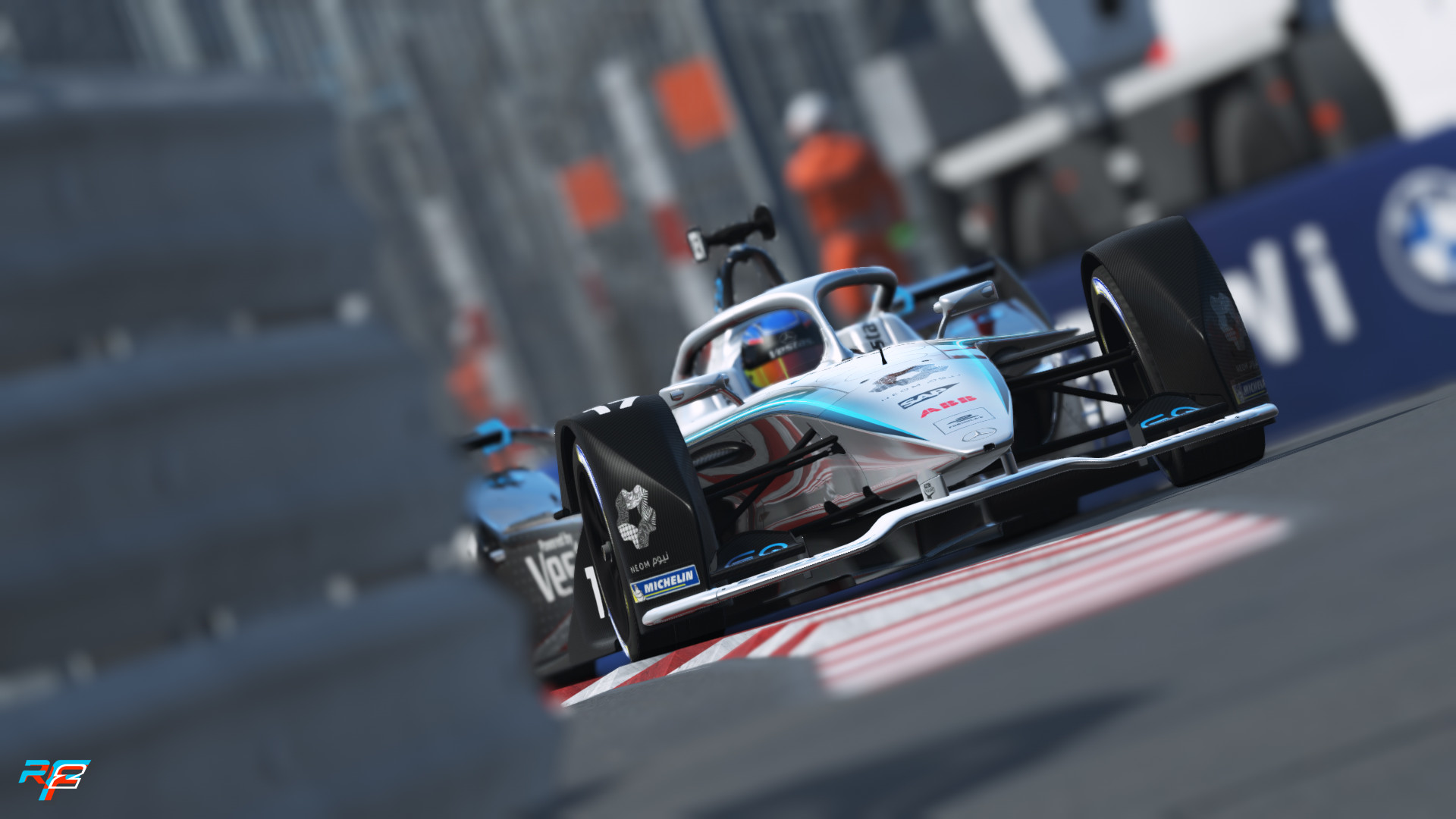
Also, depending on track conditions, the type of car or even the sim you’re driving in, smooth inputs may not be as effective. For example, rFactor 2 is notorious for favouring drivers who push the absolute limits of grip. Studio 397’s sim rewards ridiculous, on-power slip angles in many of its cars.
Setup tricks, like lowering the rear anti-rollbar setting to its softest level, exploit the game’s physics engine, helping produce quick lap times. Only in endurance situations does this approach prove to be overly detrimental to tyre life.
Low-Grip Situations
Tight, twisty street tracks with low-grip surfaces can favour a more aggressive approach, too. When presented with a slippery track - which can be caused by dampness or the lack of a rubbered-in racing line - cars can understeer if driven too smoothly.
In this scenario, more abrupt steering inputs can help turn the car and aid rotation. But even if the driving style looks busy and more chaotic from the outside, the driver may simply be doing everything possible to achieve the smoothest possible load transfer, thereby maximising grip.
This is because not all cars - and not all tyres - react the same way.
Motorsport Applications
In Formula 1, for example, driving with smooth steering inputs is the favoured approach, as Pirelli’s race tyres are notorious for high degradation levels. Conversely, in Formula E, drivers tend to slide their cars more as the rubber is far more durable and harder to warm up.
Formula E also uses mostly low-grip street circuits that feature plenty of tight corners, so quick rotation is needed to slalom through their hairpin bends.
Classic racing cars (generally from the 1970s and earlier) also require a more aggressive approach due to their bias-ply tyres. These are more flexible than modern radial tyres and need handfuls of steering lock to go quickly.
However, even if the driving style looks abrupt, the end goal is always the same: to achieve smooth load transitions and maximum grip more of the time.
To receive real-time sim coaching across F1 25, Assetto Corsa Competizione, Le Mans Ultimate and iRacing, you can sample trophi.ai free of charge for seven days.
Powered by AI, trophi.ai provides live on-track telemetry, single lap and stint analysis and braking point assistance, with higher subscription tiers including more advanced features like setups, reference laps, one-on-one coaching and many more perks.


