

iRacing
iRacing Coaching: Is It Worth It and How to Choose the Right Option
According to iRacingData.com, the highest iRating for an individual is 13,118 for the Sports Car iRacing licence, which most drivers will never surpass. For many, getting past 2,000 iRating is a more relatable target, with the same dataset revealing that for the two main road course disciplines, 20 per cent of drivers are between 1,200 and 1,300. To edge into the upper echelons of iRacing’s ranking system and face off against more competent opponents, sim racers often look for that silver bullet. Yet, the reality often is that hard work will pay off. One way to progress is by investing in iRacing coaching, be that AI-powered (e.g., trophi.ai) or through one-on-one coaching sessions and telemetry-based services – keeping in mind that the end goal of iRacing isn’t necessarily all about chasing the score, but that a higher score will at least see you enter higher quality races. But which method works for you? Here are some pointers.

Why iRating Matters
iRating is a publicly viewable number that showcases to the iRacing community your skill level. The higher it is, the more successful race results against stronger drivers you have achieved.
This can go down, as well as up, which makes the achievement of reaching a higher score all the more covetable. An unfortunate spin or over-eager overtaking manoeuvre can see you finish at the back of the pack, denting your iRating.
So you must be quick and tidy to progress. A higher level also means you’ll be placed against better drivers - there’s quite literally the chance you encounter Max Versappten in a race, but only if your iRating is high enough to be placed in the same split.
Why Brief Practice Sessions Alone Won’t Work
As, hopefully, your iRating increases, so will that of your opponents. In other words, the better you get, iRacing will place you into events against tougher competition. You’ll rarely be matchmade to drivers with significantly lower iRating, for instance.
As you encounter quicker and quicker drivers, the time gaps narrow. The law of diminishing returns is present. Starting your iRacing journey, you may be in a race where some drivers are more than a second per lap slower than others. But higher up the iRating ladder, there can be tenths, even hundreds, of a second between competitors.
It gets to the point where simply running a handful of practice laps before a race isn’t enough preparation, and that’s when many look for some form of training or iRacing coaching.
iRacing Coaching Types
There are numerous options available to you if you find yourself in this position against tightly packed grids.
Services such as one-on-one sim racing coaching by a seasoned professional, an AI-powered coach such as trophi.ai, telemetry and data apps and services or even free advice on the likes of Reddit, Facebook Groups and YouTube videos.
Across each option, you’ll need a consistent, easy-to-understand methodology and measurable results.
One-on-One Coaching
Several real-world, or sim racing star, drivers offer iRacing coaching services, alongside services such as VRS, Apex and Coach Dave Academy, which pair you with someone from a roster of associates.
Prices and specific servers do vary, but expect to pay between $50 and $100 per hour. Here, you should expect to receive a tailored program, with a calendar that matches your availability and advice that matches your ability.
Consequently, expect them to adapt to your particular shortcomings, and build a rapport with you on your journey - but, for a not-insignificant price and only when you are both available.
Data Platforms
The aforementioned VRS and Coach Dave Academy, plus other services such as Garage 61, offer telemetry-based services.
After all, motorsport competitors and engineers pore over such data after every session, so the same can apply to sim racing. Within this area, there are several free options too.
However, one potential drawback is that you must learn how to understand and interpret the telemetry, and if you select a service that only provides the data, it can be confusing.
Free Resources
The advantages and disadvantages here are almost self-explanatory. There is zero cost to you, other than time, but neither are the threads and videos particularly tailored to your exact requirements.
Learning from online content is a large part of becoming a better sim racer, and watching a livestream of a pro driver practising can be beneficial. But the unstructured nature can mean this is an ideal starting point, but not the end goal.
AI Coaches
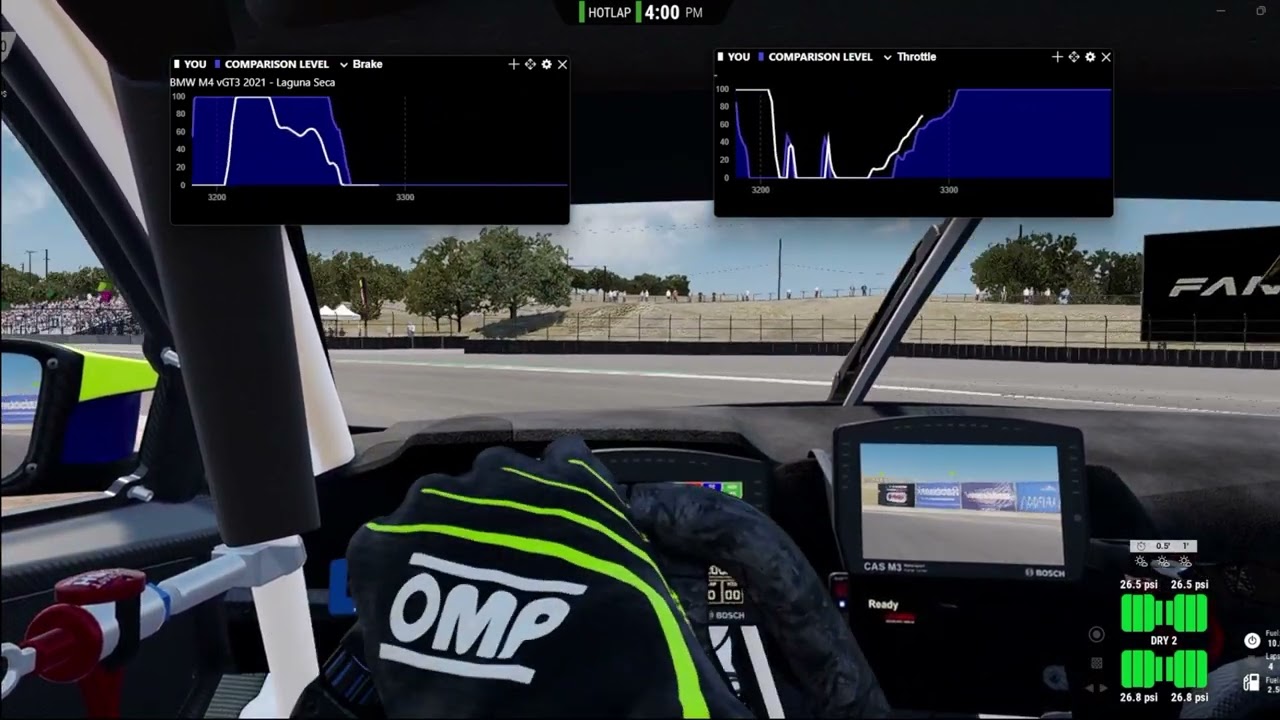
The personal touch isn’t found when using an AI-based iRacing coach, such as trophi.ai, for instance. However, it is available at any time or day that suits you. And the reference points, such as braking, are concrete and consistent each and every lap.
This solid foundation and repeatability baked into the very nature of an AI coach should mean you can have measurable and comparable results. It can also factor in traffic and race situations, which can sometimes be outside of your contract and mask progress - something that a pure telemetry-based platform may not consider.
This is where a service such as trophi.ai can assist, offering both telemetry data and overlays, with a more in-depth coaching system. In fact, don’t take our word for it, here’s what a user said about trophi.ai during our recent survey.
"Since using trophi.ai, I have gone from not keeping up with the pack to being mid-pack or better. I have used several coaching systems, and none compares to trophi.ai!"
You can sign up for the free trial today.
Written by the teams at trophi.ai and Traxion.GG.


