

.jpg)
LMU
Le Mans Ultimate Hypercar Braking Guide
Le Mans Ultimate’s Hypercars are undoubtedly the most complicated and difficult to drive in the game, thanks to advanced hybrid systems and the virtual energy system. However, one often-overlooked aspect is how these systems can affect a hybrid Hypercar’s braking potential, with stopping power influenced by their onboard motor-generator units (MGUs).In the following article, we will explain how to harness the hybrid element of a Hypercar to maximise your braking on the track, including a full explanation of the sim’s brake migration feature.

What Does Brake Migration Do in LMU?
Brake migration is the dynamic adjustment of brake bias during the braking phase, meaning the distribution of braking force shifts between the front and rear wheels as the driver applies or releases the pedal. Rather than staying fixed, the balance moves in response to brake pressure and grip changes to keep the car stable and controllable. This allows drivers to optimize both initial stopping power and rotation into the corner.
Braking Differences Between Hybrid and Non-Hybrid Hypercars
LMU simulates the FIA World Endurance Championship. The top class of this series is HYpercar, split between LMDh and LMH cars.
All Hypercars are rear-wheel-drive, but LMDh cars are mandated to have an MGU across the rear axle. LMH car manufacturers, on the other hand, can opt to run an MGU across the front axle, giving them all-wheel drive during deployment (LMH cars can generally deploy their battery at over 190 kph).
LMH manufacturers can also choose to run entirely without a hybrid system. Cars in this situation, such as the Aston Martin Valkyrie, Glickenhaus SCG 007 and Vanwall Vandervell 680, can brake conventionally; i.e., the only way to significantly alter braking behaviour on the fly is through adjusting the brake balance.
For hybrid Hypercars, however, there are a few more things to consider.
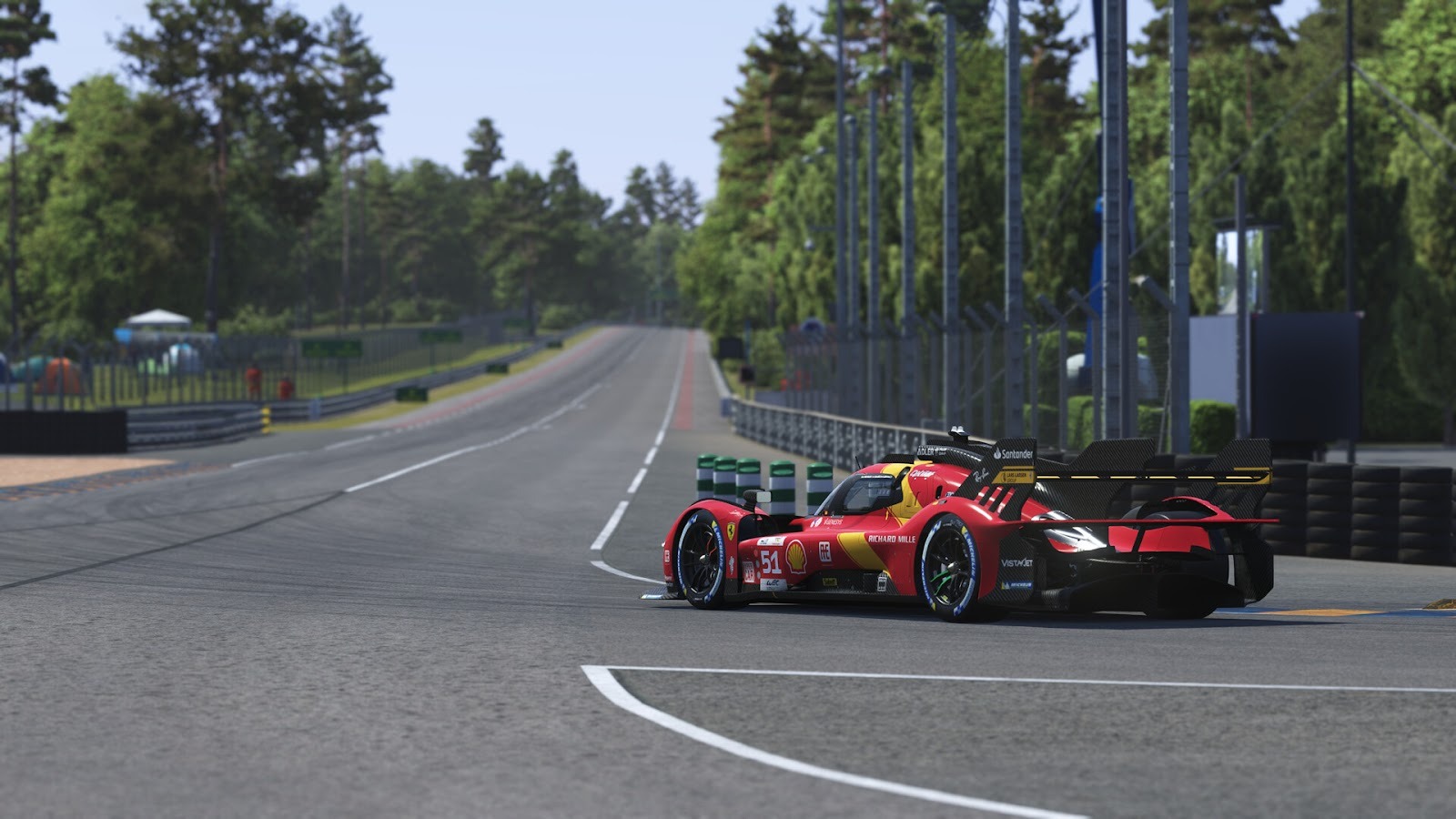
Hybrid Hypercar Braking
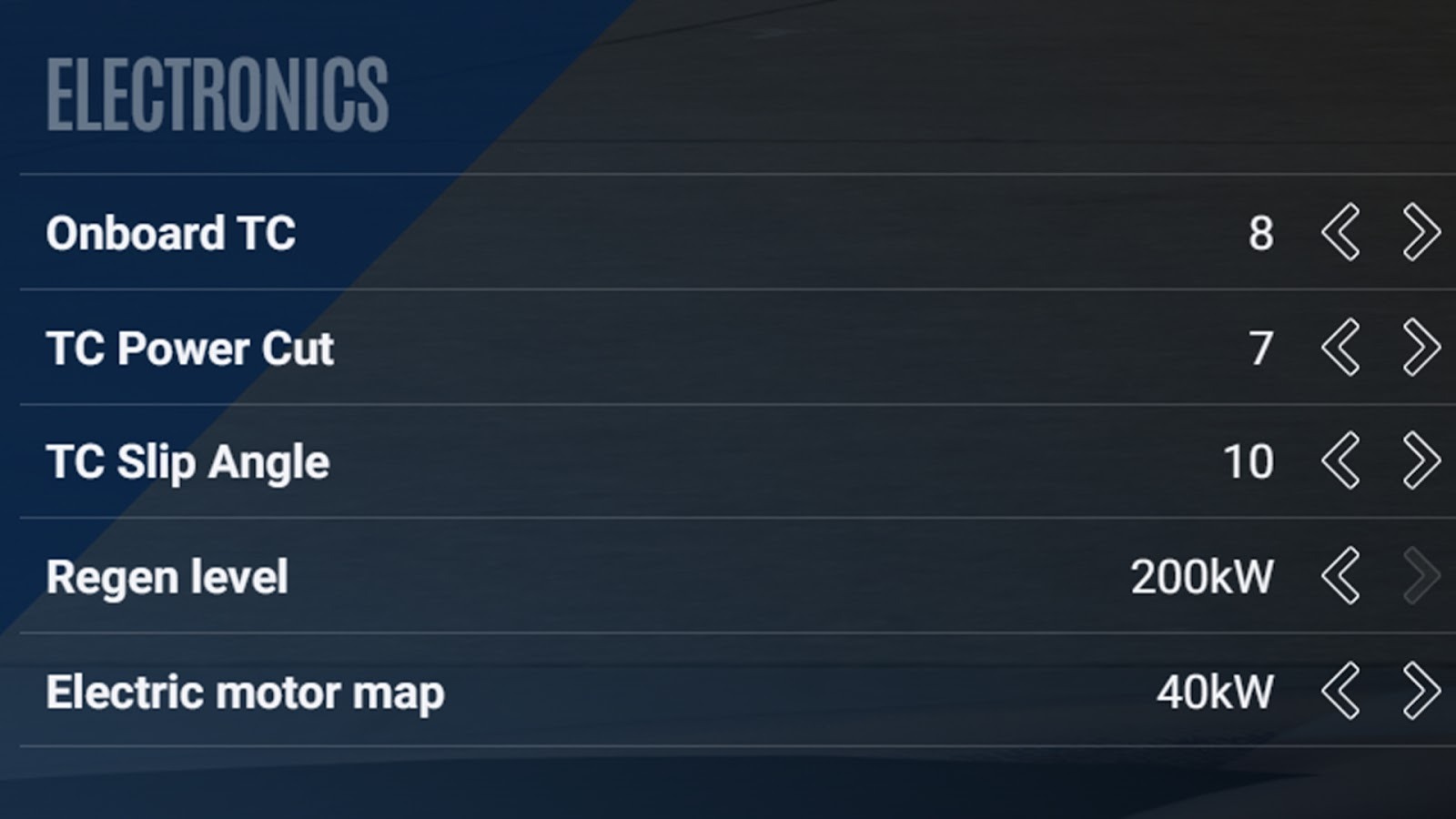
In addition to brake bias, you will have to consider brake migration, regen level, and motor map settings when driving hybridised Hypercars.
The MGU harvests heat energy during braking, creating a decelerative effect. Increasing the MGU's regen level, therefore, increases the stopping force on the affected axle. Reducing the regen level in LMU has a noticeable detrimental effect on braking distances, so it’s advisable to keep this setting at its maximum (200 kW for LMH cars, 170 kW for LMDh).
Naturally, when the MGU has harvested all this heat energy through braking, it is converted into electrical energy and stored in a battery. However, if the battery is charged to 100%, the MGU will no longer regenerate energy during braking, reducing your car’s overall braking force and drastically shifting its brake bias.
In this situation, LMDh cars will tend to lock their front tyres, and LMHs their rear tyres.
To prevent this, you have to increase the motor map setting to deploy some of the stored energy, allowing brake harvesting to occur.
For an LMDh car, the motor map can generally be set to 50 kW throughout a stint, while LMH cars cope well with 40-60 kW. These figures can obviously change depending on the circumstances (for example, as your battery is full at the start of a race, you’ll need to deploy charge quickly to make enough headroom for brake harvesting).
Brake Migration Explained
Now that the delicate balance between motor map and regen level has been explained, there’s another factor to consider with Hypercar braking.
Brake migration is an electrically controlled system that cleverly increases forward brake bias when it’s most advantageous. The following example should help explain the theory behind it.
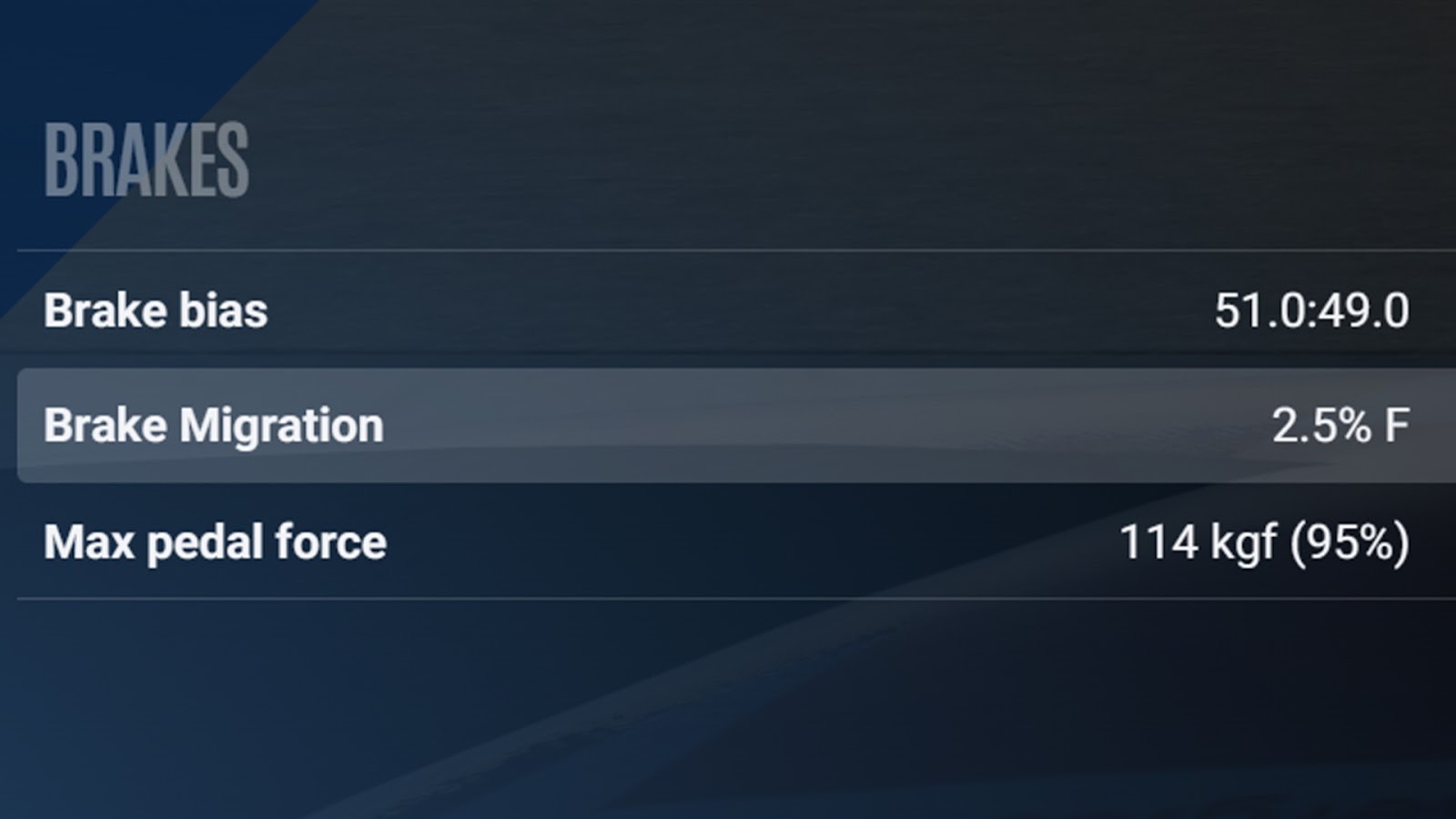
Brake migration in LMU can be set between 0 and 2.5F, in increments of 0.5F (the ‘F’ represent ‘forwards’, as in forward-bias). This amounts to a maximum of 2.5% additional braking force on the front brakes via the car’s electrical brake-by-wire (BBW) system.
BBW is extremely complex, so check out Driver61’s article on Formula 1’s similar braking system for more information.
But what does brake migration actually do? Well, if you start with a brake bias of 51:49 (51% of the braking force to the front brakes, 49% to the rear), and you have a brake migration setting of 2.0F, as soon as you hit 100% brake travel, your brake bias will effectively be 53:47
As you bleed off the brakes and get ready to turn into a corner, the brake bias will drop to 52:48 at 50% pedal travel. At 0% pedal travel, the brake bias returns to 51:49.
Why Brake Migration Matters
So, why is it important to use brake migration in LMU? Well, it's advantageous because it leverages the powerful aerodynamics of Hypercars without compromising mid- and late-stage braking performance.
Generally, if you slam on the brakes at 300 kph in a Hypercar, you won’t lock the front tyres thanks to the extra downforce being created. By increasing the forward brake bias through brake migration, you effectively make the most of this effect, thereby shortening stopping distances.
However, as the aerodynamic load decreases with speed, brake migration ensures the brake bias returns to a safer level, maintaining stopping power while preventing lock-ups.
Brake migration, therefore, helps create the best of both worlds.
In LMU, however, there’s no nuance to setting brake migration, as the default figure of 2.5F is optimal for best braking performance: tuning your standard brake bias figure is the best way to alter your car’s behaviour while braking.
Overheating
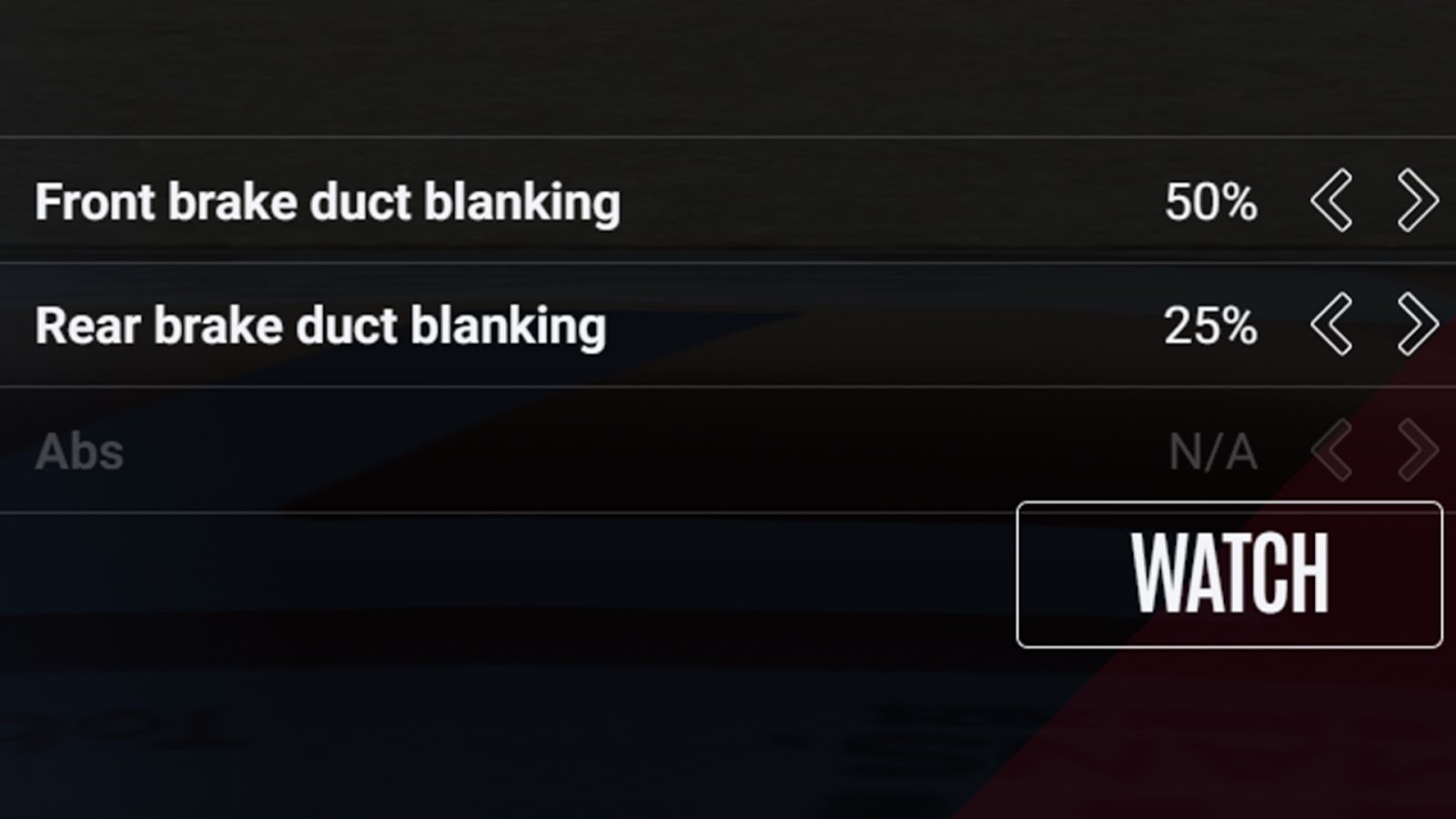
It’s possible to overheat your brakes in LMU, so it’s wise to open up their ducts to prevent this. When brakes overheat in LMU (and real-world motorsport), they lose performance and can heat tyres to outside their optimal operating window.
As the MGU assists with braking, it’s important not to neglect the ducts on the unassisted axle. For LMDh cars, this is the front; for LMH cars, it’s the rear. Keep them open enough to avoid overheating and further brake issues (lower numbers equals more open, higher numbers equals more closed).
Brake duct settings are also affected by ambient temperature, so aim to run a setting that both prevents the brakes from overheating or from getting too cold. In races, especially those with extreme temperature differences, such as the 24 Hours of Le Mans, a compromise will be necessary. Erring on the side of caution is usually advisable.
However, if the brake widget shows that your brakes are running red hot between corners, this is a sign you need to use less blanking (lower numbers). Conversely, if the brake widget stays mostly a chilly blue, you should use more blanking to bring temperatures up (higher numbers).
Many factors can affect optimal brake duct values, including driving style, setup, car choice and ambient conditions, so there’s no one-size-fits-all ‘best setting’ to suit every circumstance. This is why testing is extremely important.
For more tips on improving your driving in Le Mans Ultimate, why not sign up for trophi.ai coaching?
Harnessing the power of AI, trophi.ai is an app that monitors your virtual driving and offers real-time suggestions to help you become a faster, more consistent sim racer.
Also available for Rocket League, Assetto Corsa Competizione, iRacing, and F1 23/24/25, trophi.ai is part of a tiered subscription system, with the cheapest giving you live telemetry and access to the MansellAI voice coach, voiced by former racing driver and Driver61 founder Scott Mansell.
This is also available as part of a seven-day free trial, so you can easily find out for yourself if AI-powered driver coaching can work for your Le Mans Ultimate sim racing career.
For more information and to sign up for the free trial, please visit the trophi.ai website.
For a more detailed guide on Virtual Energy and the differences between LMDh and LMH cars within LMU, check out our guide here.
Written by the team at trophi.ai.


