One platform to build, deliver, and oversee training.
Everything from your manuals to the debrief, in one platform. Build lessons and part-task simulators, or connect the ones you have, then coach and evaluate every learner.
ARCHITECTURE
Every part of training, with your experts in command.
Your experts author the training, Kairos runs it for every learner, and your experts decide what it teaches and how it behaves.
01 / Create
Your experts build the training.
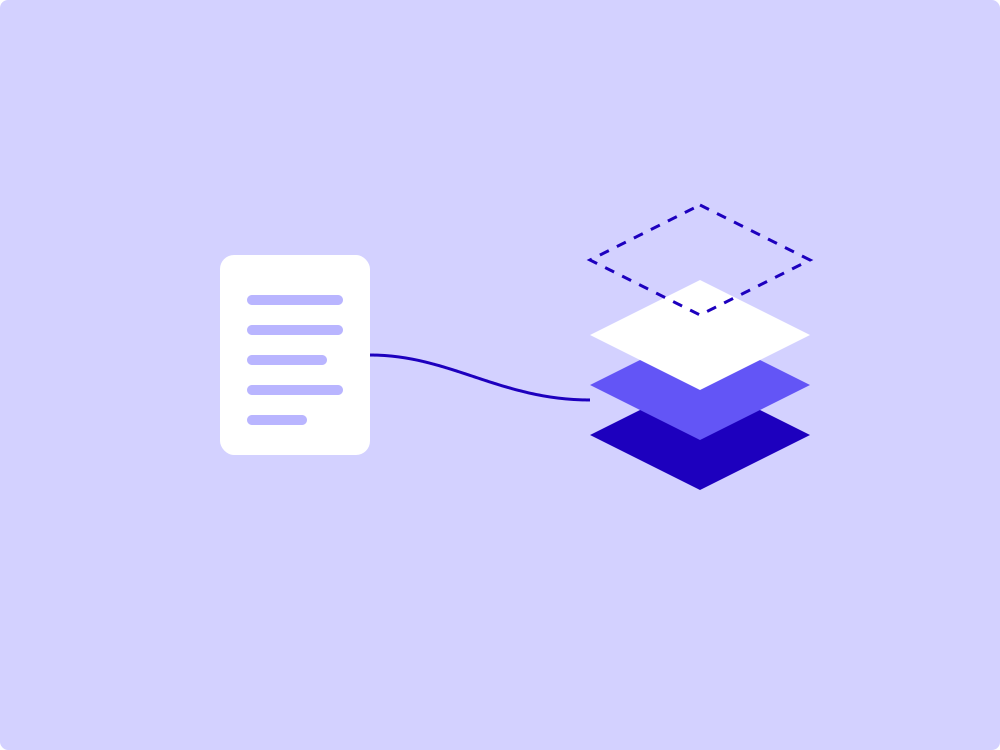
In Kairos Foundry, experts create lessons, scenarios and part-task simulators, with AI doing the heavy lifting.
02 / Deliver
Kairos coaches every learner.
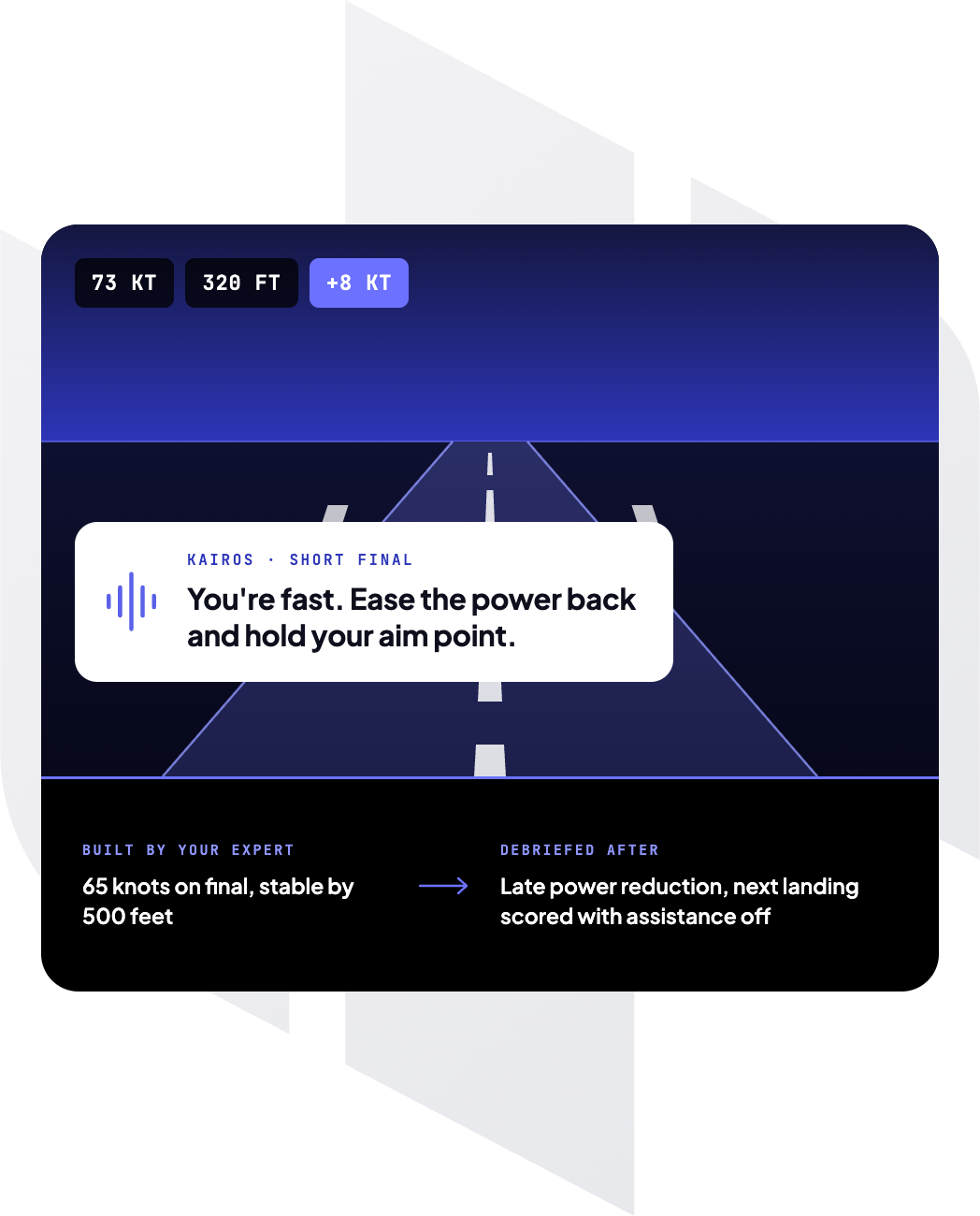
Kairos Instruct runs the training, coaches each learner in real time, and debriefs every session.
03 / Control
Your experts stay in control.
Experts can change the training at any time. Instructors see every session and every call Kairos makes.
01 / Kairos Foundry
No code, no specialized developers.
Experts and courseware designers build the training by typing what they want. Foundry drafts it from your manuals, SOPs and doctrine, and cites the source for every instruction.
01
Set the standard
Define what good performance looks like, what deserves attention, and when Kairos should step in or stay quiet, grounded in your own SOPs.
02
Design the scenario
Start from a prebuilt scenario or a blank page. Set the phases and conditions, then generate variations and failure cases.
03
Create the lesson
Turn static courseware into interactive lessons tied to the simulator, with briefings, guided walkthroughs and checks for understanding.
04
Build or connect the simulator
Connect the simulator you already have, or build a focused part-task simulator for the exact equipment or task.
02 / Kairos Instruct
Coaching that knows what matters right now.
Kairos briefs each learner, watches every repetition and speaks up only when a correction can still change the outcome. After each session, it debriefs what went wrong and why.
01
Read live performance
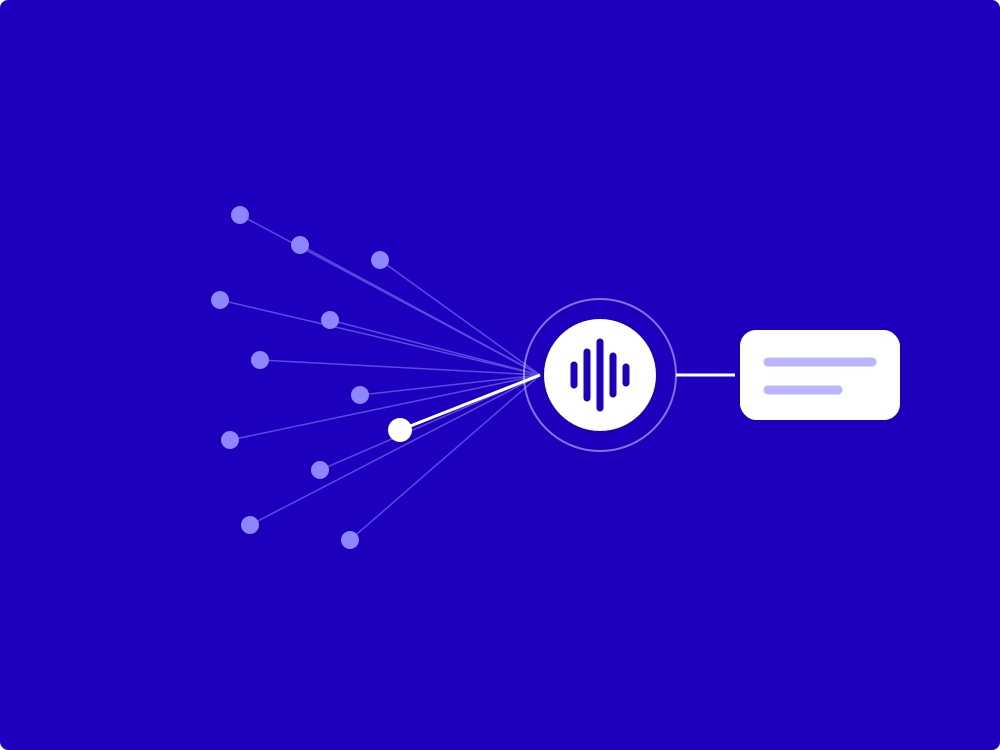
Kairos reads simulator telemetry, audio and video in real time, and compares it to the standard your expert set.
02
Prioritize
A ranking model weighs every open issue. It decides what needs attention now, what can wait for the debrief, and when silence is the better call.
03
Instruct
Kairos gives one clear, spoken instruction while there’s still time to act.
04
Evaluate and debrief
Turn assistance off to score what the learner can do alone, then go straight to the moments that changed the outcome and their root causes.
03 / Control
Built for review, approval and controlled environments.
Every instruction can be explained, checked and corrected. Kairos runs wherever your training does.
01
Experts decide what Kairos teaches
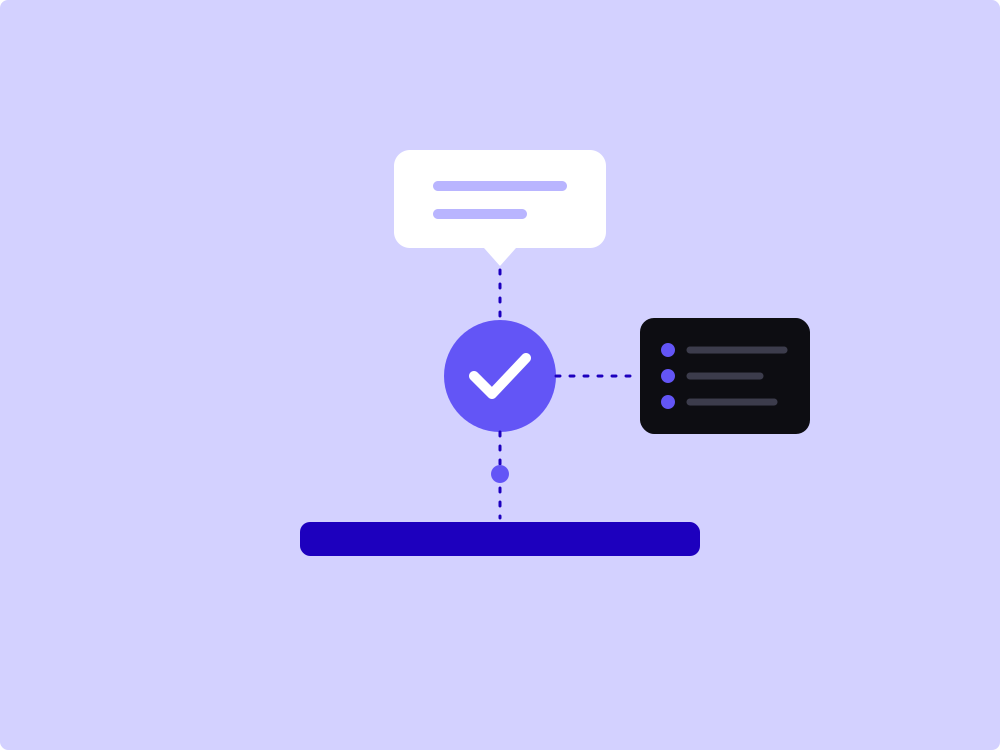
Your experts set what Kairos teaches and when it speaks, and can change it at any time. If a call is wrong, they correct it and rerun the session to confirm the fix.
02
Instructors oversee every session
Instructors see every session, every score and every call, and how Kairos is behaving with each learner.
03
Traceable by design
Every instruction traces back to the moment it was made, the standard behind it and the source it came from.
04
Deploy on your terms
Kairos runs on premise, in the cloud or fully disconnected, and reports results into your LMS.
START A CONVERSATION
Bring a scenario. Build it with us.
Show us a task your experts need to scale, or a simulator you want to add an instructional layer to. We’ll build a scenario around it with your expert in the session.